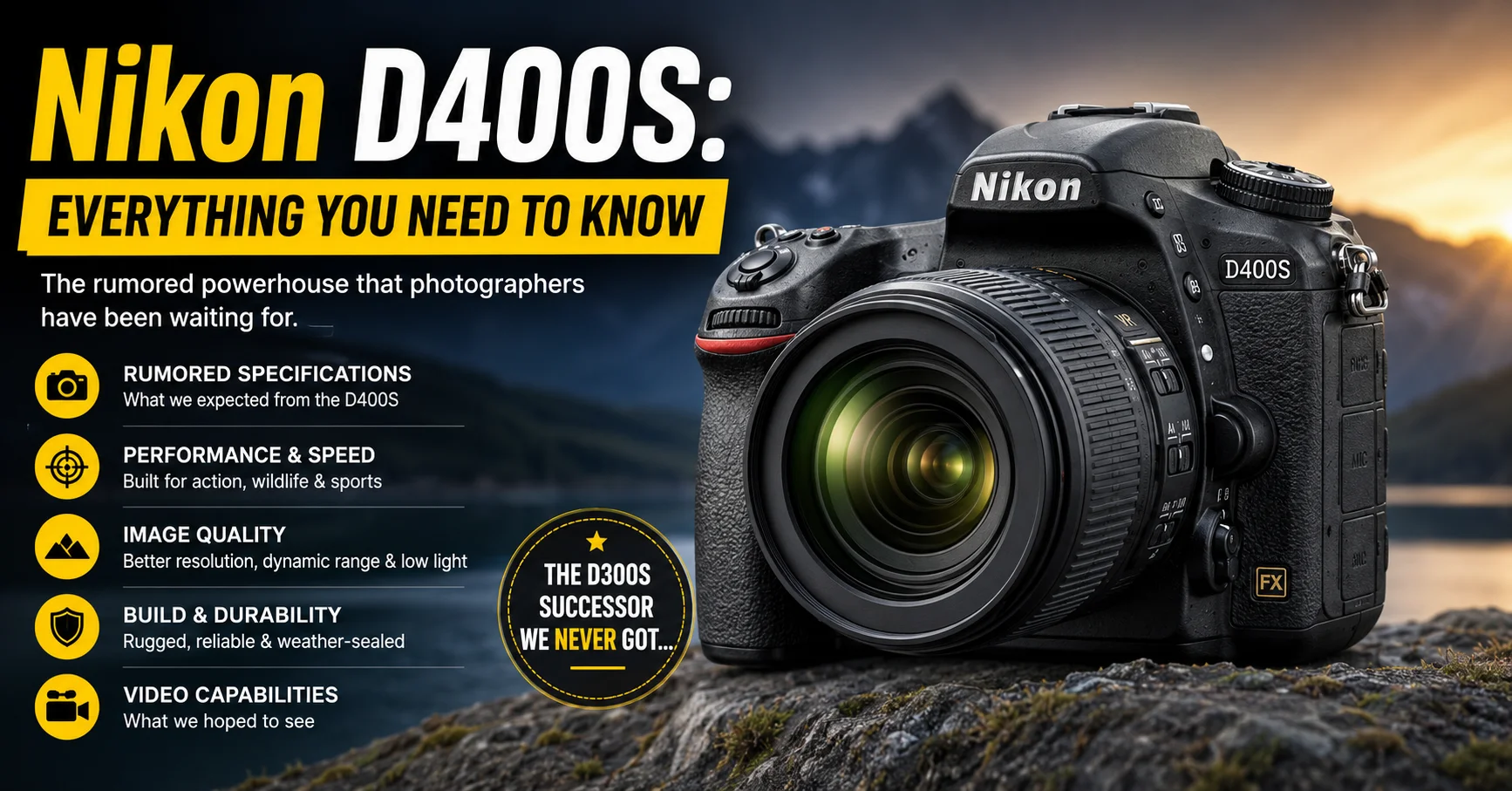
The Nikon D400S is a camera model that often sparks curiosity among photography enthusiasts. Over the years, rumors and discussions about a potential Nikon D400 or D400S have circulated widely in photography communities. Many Nikon users hoped for a powerful successor to the highly respected Nikon D300S, a camera that earned a reputation for durability, speed, and professional-level performance.
Whether you have heard about the Nikon D400S through online discussions, photography forums, or camera reviews, understanding what it represents can help you make informed decisions about your photography equipment. In this guide, we will explore the history behind the Nikon D400S concept, its expected features, potential specifications, and why photographers continue to talk about it even years after the rumors began.
If you are a Nikon fan, wildlife photographer, sports shooter, or simply someone interested in DSLR technology, this comprehensive guide will provide everything you need to know.
ALSO READ: NZBServer: A Beginner-Friendly Guide To Usenet Access
What Is The Nikon D400S?
The Nikon D400S is widely considered a rumored DSLR camera that many photographers expected Nikon to release as the successor to the Nikon D300S. While Nikon officially released several advanced DSLR cameras after the D300S, a camera carrying the D400S name never officially arrived.
The D300S, introduced in 2009, became one of Nikon’s most popular APS-C professional DSLRs. It combined rugged construction, fast shooting speeds, advanced autofocus capabilities, and excellent image quality. Because of its success, photographers anticipated a replacement that would continue the professional DX-format DSLR line.
The rumored Nikon D400S was expected to fill this role.
The Legacy Of The Nikon D300S
To understand why the Nikon D400S generated so much excitement, it helps to look at the camera that inspired it.
The Nikon D300S offered:
- A 12.3-megapixel DX-format sensor
- Durable magnesium alloy construction
- Weather sealing
- Advanced autofocus system
- Continuous shooting up to 7 fps
- Dual card slots
- Professional controls
At the time of its release, the D300S was considered one of the best APS-C DSLRs available. It appealed to wildlife photographers, sports shooters, photojournalists, and enthusiasts seeking professional performance without the cost of a full-frame camera.
As technology evolved, many users expected Nikon to release an upgraded version with modern features, leading to widespread speculation about the Nikon D400S.
Why Photographers Wanted A Nikon D400S
The demand for a Nikon D400S was driven by several factors.
Professional DX Performance
Many photographers prefer APS-C cameras because of the crop factor advantage. Wildlife and sports photographers benefit from additional effective reach when using telephoto lenses.
A professional DX camera offers:
- Greater subject magnification
- Faster shooting speeds
- Reduced equipment costs
- Smaller and lighter lenses
The Nikon D400S was expected to deliver all these benefits while maintaining professional-grade performance.
Improved Sensor Technology
Sensor technology improved significantly after the D300S launch. Photographers hoped the Nikon D400S would include:
- Higher resolution
- Better dynamic range
- Improved low-light performance
- Enhanced color reproduction
These upgrades would make the camera highly competitive in the enthusiast and professional markets.
Advanced Autofocus
Fast and accurate autofocus is essential for action photography.
Many expected the Nikon D400S to feature:
- More autofocus points
- Better subject tracking
- Improved low-light focusing
- Enhanced accuracy for moving subjects
Such improvements would have made it attractive to sports and wildlife photographers.
Expected Nikon D400S Specifications
Although the Nikon D400S never became an official product, industry speculation often suggested a feature set that would rival professional cameras.
Sensor
Many rumors pointed toward:
- 20 to 24 megapixel APS-C sensor
- Improved image processing
- Greater dynamic range
- Enhanced ISO performance
This would have represented a significant upgrade over the D300S.
Processor
A modern EXPEED processor would likely have delivered:
- Faster image processing
- Improved noise reduction
- Better video capabilities
- Enhanced overall performance
Continuous Shooting
Speed has always been important in professional DX cameras.
Expected shooting speeds included:
- 8 to 10 frames per second
- Larger image buffer
- Faster write speeds
This would have made the Nikon D400S suitable for capturing fast-moving subjects.
Autofocus System
The camera was widely expected to include:
- Advanced multi-point autofocus
- Enhanced subject tracking
- Better low-light performance
- Faster focus acquisition
These features would have appealed to serious photographers.
Build Quality
A professional body design was another commonly anticipated feature.
Expected elements included:
- Magnesium alloy chassis
- Comprehensive weather sealing
- Durable shutter mechanism
- Professional control layout
Many photographers wanted a camera capable of performing in harsh environments.
Nikon D400S And Wildlife Photography
Wildlife photography was one of the main reasons photographers wanted a Nikon D400S.
Extended Reach
The APS-C sensor crop factor effectively increases the apparent reach of telephoto lenses.
For example:
- A 300mm lens provides a field of view similar to a 450mm lens on full-frame.
- A 500mm lens offers even greater subject magnification.
This advantage helps photographers capture distant animals without investing in extremely long lenses.
Fast Burst Shooting
Wildlife moments can happen in an instant.
Fast continuous shooting helps photographers:
- Capture birds in flight
- Track running animals
- Photograph unpredictable behavior
- Increase keeper rates
The Nikon D400S was expected to excel in these situations.
Reliable Autofocus
Wildlife subjects move quickly and unpredictably.
Advanced autofocus would have enabled photographers to maintain sharp focus even during challenging conditions.
Nikon D400S For Sports Photography
Sports photography requires speed, accuracy, and reliability.
The Nikon D400S concept appealed strongly to sports photographers because it promised:
Quick Performance
Fast frame rates help capture:
- Critical game moments
- Athletic movements
- Goal celebrations
- Split-second action
Strong Tracking Capabilities
Athletes move rapidly across the frame.
An advanced autofocus system would have improved subject tracking and increased the likelihood of sharp images.
Durable Construction
Professional sports photographers often work in demanding environments.
A rugged camera body with weather protection remains highly desirable.
Video Capabilities That Were Expected
As video became increasingly important, photographers expected the Nikon D400S to include modern video features.
Potential features discussed by enthusiasts included:
- Full HD recording
- Higher frame rates
- Manual exposure controls
- External microphone support
- Improved video autofocus
These additions would have expanded the camera’s appeal to content creators and videographers.
Why Nikon Never Released A D400S
One of the biggest questions surrounding the Nikon D400S is why it never appeared.
Several factors may explain this.
Shift Toward Full-Frame Cameras
During the years following the D300S release, Nikon invested heavily in full-frame DSLR development.
Cameras such as:
- Nikon D750
- Nikon D800 series
- Nikon D850
became major priorities.
As full-frame technology became more affordable, Nikon may have focused resources on expanding that segment.
Changes in Market Demand
The camera market evolved significantly.
Many enthusiasts began moving toward:
- Full-frame systems
- Mirrorless cameras
- Hybrid photo and video solutions
These trends may have reduced the demand for a professional APS-C DSLR.
Rise of Mirrorless Technology
Mirrorless systems transformed the industry.
Manufacturers shifted attention toward:
- Electronic viewfinders
- Advanced autofocus systems
- Compact designs
- Enhanced video features
This transition likely influenced Nikon’s product strategy.
Alternatives To The Nikon D400S
Although the Nikon D400S never officially launched, Nikon released several cameras that filled portions of its intended role.
Nikon D500
The Nikon D500 is often viewed as the spiritual successor to the D300S.
Key features include:
- 20.9-megapixel DX sensor
- 10 fps continuous shooting
- Professional autofocus system
- Excellent low-light performance
- Rugged weather-sealed body
Many photographers consider the D500 to be the camera the Nikon D400S was expected to become.
Nikon D7500
The D7500 offers:
- Strong image quality
- Fast performance
- Advanced autofocus
- Lightweight construction
It serves enthusiasts seeking high performance without a fully professional body.
Nikon Z Series Cameras
Modern Nikon mirrorless cameras provide:
- Advanced autofocus
- Excellent image quality
- High-speed shooting
- Improved video capabilities
Many photographers have transitioned from DSLRs to Nikon’s mirrorless ecosystem.
Is The Nikon D400S Still Relevant Today?
Despite never becoming a commercial product, the Nikon D400S remains relevant because it represents a camera many photographers wished existed.
The interest surrounding the Nikon D400S highlights several enduring desires among photographers:
- Professional APS-C performance
- Affordable wildlife photography solutions
- Durable camera bodies
- High-speed shooting capabilities
- Advanced autofocus systems
These needs continue to influence camera development today.
Who Would Have Benefited Most From A Nikon D400S?
Had the Nikon D400S been released, it likely would have appealed to:
Wildlife Photographers
The crop factor and fast performance would have been ideal for photographing animals and birds.
Sports Photographers
Rapid burst shooting and strong autofocus would have supported action photography.
Outdoor Photographers
Weather sealing and rugged construction would have provided reliability in difficult environments.
Enthusiast Photographers
Advanced features without the cost of flagship full-frame cameras would have attracted serious hobbyists.
Buying Considerations For Nikon Users Today
If you are searching for a camera similar to what the Nikon D400S was expected to offer, consider:
- Your photography style
- Lens investment
- Budget
- Need for video features
- Preference for DSLR or mirrorless systems
For many photographers, the Nikon D500 remains one of the best alternatives due to its combination of speed, autofocus performance, and professional durability.
Conclusion
The Nikon D400S remains one of the most talked-about unreleased cameras in Nikon history. Built on the legacy of the legendary D300S, it represented the dream of a professional APS-C DSLR packed with modern features, exceptional autofocus, fast burst shooting, and rugged construction.
Although Nikon never officially introduced a camera under the D400S name, many photographers believe the Nikon D500 ultimately fulfilled much of the role enthusiasts envisioned. The continued interest in the Nikon D400S demonstrates the lasting appeal of high-performance DX-format cameras, particularly for wildlife, sports, and action photography.
For Nikon fans, the Nikon D400S remains a fascinating chapter in camera history and a reminder of how strongly photographers value speed, reach, reliability, and professional-grade performance.
FAQs
What is the Nikon D400S?
The Nikon D400S is a rumored DSLR camera that was widely expected to succeed the Nikon D300S but was never officially released.
Was the Nikon D400S ever launched?
No, Nikon never officially announced or released a camera called the Nikon D400S.
Which camera is considered the successor to the D300S?
Many photographers consider the Nikon D500 to be the true successor to the Nikon D300S.
Why was there so much interest in the Nikon D400S?
Photographers wanted a professional APS-C DSLR with modern autofocus, faster shooting speeds, and improved image quality.
Is the Nikon D500 a good alternative?
Yes, the Nikon D500 offers professional-level performance and is widely regarded as one of Nikon’s best DX-format cameras.
ALSO READ: Nothing Promo Code: Latest Deals And Savings

Evelyn is a technology writer and researcher specializing in software development, artificial intelligence, and emerging digital systems. With hands-on experience in building and analyzing modern tech solutions, she focuses on translating complex technical concepts into clear, practical insights for developers, entrepreneurs, and curious readers.